Watching NASA’s launch this week reignited that sense of awe and possibility. I still remember STS-1, when Columbia lifted off and reusable spacecraft turned science fiction into reality.
And then there are the moments that stay with you for very different reasons. I remember sitting in an auditorium with hundreds of colleagues at AT&T’s Bedminster, New Jersey facility — home to a critical global network operations center — watching the Space Shuttle Challenger’s STS-51L mission. The anticipation was electric… and then, in an instant, something unexplainable. The shock was immediate and unforgettable — a memory that never fades.
Now, with NASA launching the Artemis mission, that same wonder has returned — layered with memories like Challenger, where excitement and shock coexisted in a single, unforgettable moment. More than 50 years after Apollo 17, the last human Moon landing, Artemis — named for Apollo’s twin sister and the goddess of the Moon — signals our return.
But this story isn’t just about rockets or distant worlds — it’s about how the ingenuity that takes us to space is reshaping medicine here on Earth.
A Space-Age Idea, Reimagined
During the Apollo era, NASA engineers were faced with an almost unthinkable question: how do you fix a problem on a spacecraft that’s millions of miles away? Their solution was as bold as it was practical — build exact replicas on Earth and use them to simulate problems and test solutions in real time.
That approach proved critical during the Apollo 13 crisis, famously portrayed in Apollo 13, starring Tom Hanks. When an oxygen tank exploded, engineers relied on these replicas — along with early computer simulations — to test solutions and guide the crew safely home.
In many ways, this work marked the birth of what we now call a “digital twin” — a virtual model that mirrors a real-world system to anticipate challenges and plan responses. Over time, digital twins evolved from physical simulators to AI-driven, sensor-powered models. Today, they play a central role in NASA’s Artemis program, helping manage Moon-to-Mars missions where real-time human intervention isn’t possible.
And their impact doesn’t stop in space. The same principles that protect astronauts are now being applied to healthcare.
Medical Twins
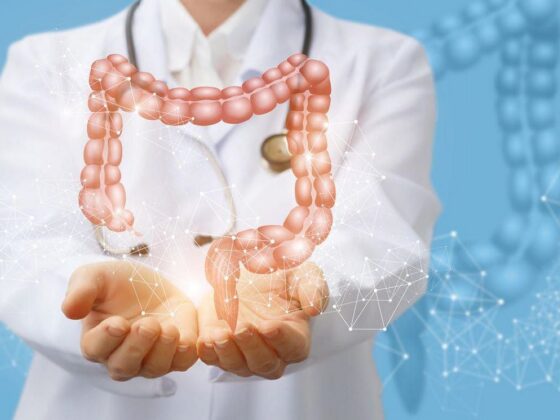
Imagine a virtual version of a patient, an organ, or even an entire biological system that behaves just like the real thing — that’s a digital twin in healthcare. Using real-time data from medical records, wearable devices, and imaging, doctors can explore multiple approaches, fine-tune therapies, and anticipate changes over time, turning years of trial and error into insights in days or even hours.
Digital twins don’t replace doctors — they amplify their expertise, enhancing precision, improving decisions, and delivering truly personalized care.
The Diagnostic Odyssey
Rare diseases — defined in the U.S. as conditions affecting fewer than 200,000 people — may be uncommon individually, but their impact is anything but. With roughly 7,000 conditions identified worldwide, they collectively affect hundreds of millions of lives.
For many patients, the journey begins not with answers, but with uncertainty. Known as the “diagnostic odyssey,” this years-long search for a diagnosis or path forward can be exhausting. Symptoms are often complex or misinterpreted, sending families from specialist to specialist, test to test, without clear direction.
Even after a diagnosis, the challenges persist. Treatment options are often limited, and small patient populations make traditional clinical trials slow and difficult. That’s where digital twins offer new hope. By creating a dynamic, virtual model of an individual patient, researchers can simulate disease progression, test therapies, and predict outcomes — without waiting years for answers.
One Spirit, Two Frontiers
From NASA’s earliest missions to today’s Artemis launches, space exploration has done more than expand our horizons — it has quietly reshaped life on Earth, from heart pumps to remote patient monitoring.
Rockets inspire awe, but quieter “rare events” unfold every day as families navigate the long, uncertain path of the diagnostic odyssey. These journeys may look different — one public and celebrated, the other private and often unseen — but they share the same truth: resilience in the face of the unknown.
In the end, both are powered by the same pioneering spirit — one that reaches for the stars, and one that refuses to give up here on Earth.
Happy reading,
Suzanne Daniels, Ph.D.
- News Watch: 100% tariff on brand drugs, new weight loss pill approved, and CVS opens pharmacy-only stores.
- Money Matters: coverage cancelled due to 5 cent unpaid balance, Medicare Advantage star rating changes means billions more for insurers, and discounted Wegovy subscription plan.
- Looking for Answers: patients turn to AI for help, navigating rare disease diagnosis, and Hunter syndrome drug approved.
- Good Stuff: including my personal favorite, To fix a patient’s irregular heartbeat, doctors first tested its digital ‘twin’!
News Watch
Wall Street Journal
Trump Administration Unveils Up to 100% Tariff on Branded Drugs
HealthDay
FDA Approves New Weight Loss Pill in Record Time
Fierce Healthcare
CVS Health opens pharmacy-only locations as it rightsizes store footprint
Money Matters
KFF Health News
She Owed Her Insurer a Nickel, So It Canceled Her Coverage
Healthcare Dive
CMS finalizes Medicare Advantage star ratings overhaul, sending billions of dollars more to insurers
Wall Street Journal
Novo Nordisk Launches Discounted Subscription Program for Wegovy
Looking for Answers
New York Times
Doctors Couldn’t Help Them. They Rolled the Dice With A.I.
Altitudes
Millions of Americans Endure a Diagnostic Odyssey as NIH’s Undiagnosed Diseases Network Expands Search for Answers
Fierce Pharma
FDA approves Denali’s Hunter syndrome drug, handing rare disease community a win
Good Stuff
New York Times
Hershey’s Promises to Use Only Real Chocolate After Backlash
Smithsonian Magazine
Despite Their Tiny Brains, Bumblebees Have a Surprising Sense of Rhythm, According to a New Study by Neuroscientists
Associated Press
To fix a patient’s irregular heartbeat, doctors first tested its digital ‘twin’
Enjoy the weekend!
Best,
Suzanne
Suzanne Daniels, Ph.D.
AEPC President
P.O. Box 1416
Birmingham, MI 48012
Office: (248) 792-2187
Email: [email protected]

News you can trust